AI Shopping
Assistant
Turn a product question into a guided shopping journey. Ask in everyday language, compare catalog-backed choices, select an option and make explicit cart changes—then finish in the shop’s own checkout. Try the same assistant experience in Drupal Commerce and WooCommerce.
See It In Action
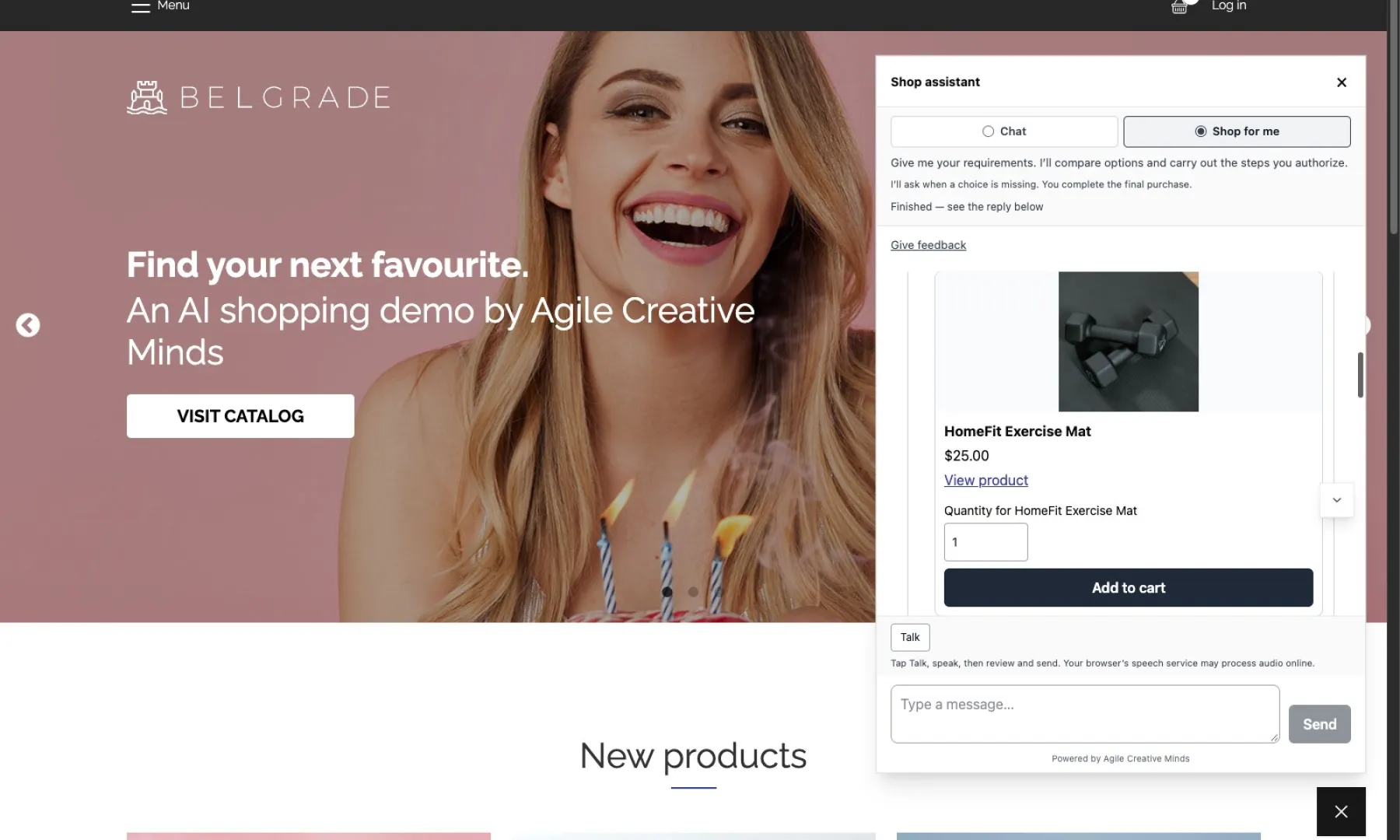
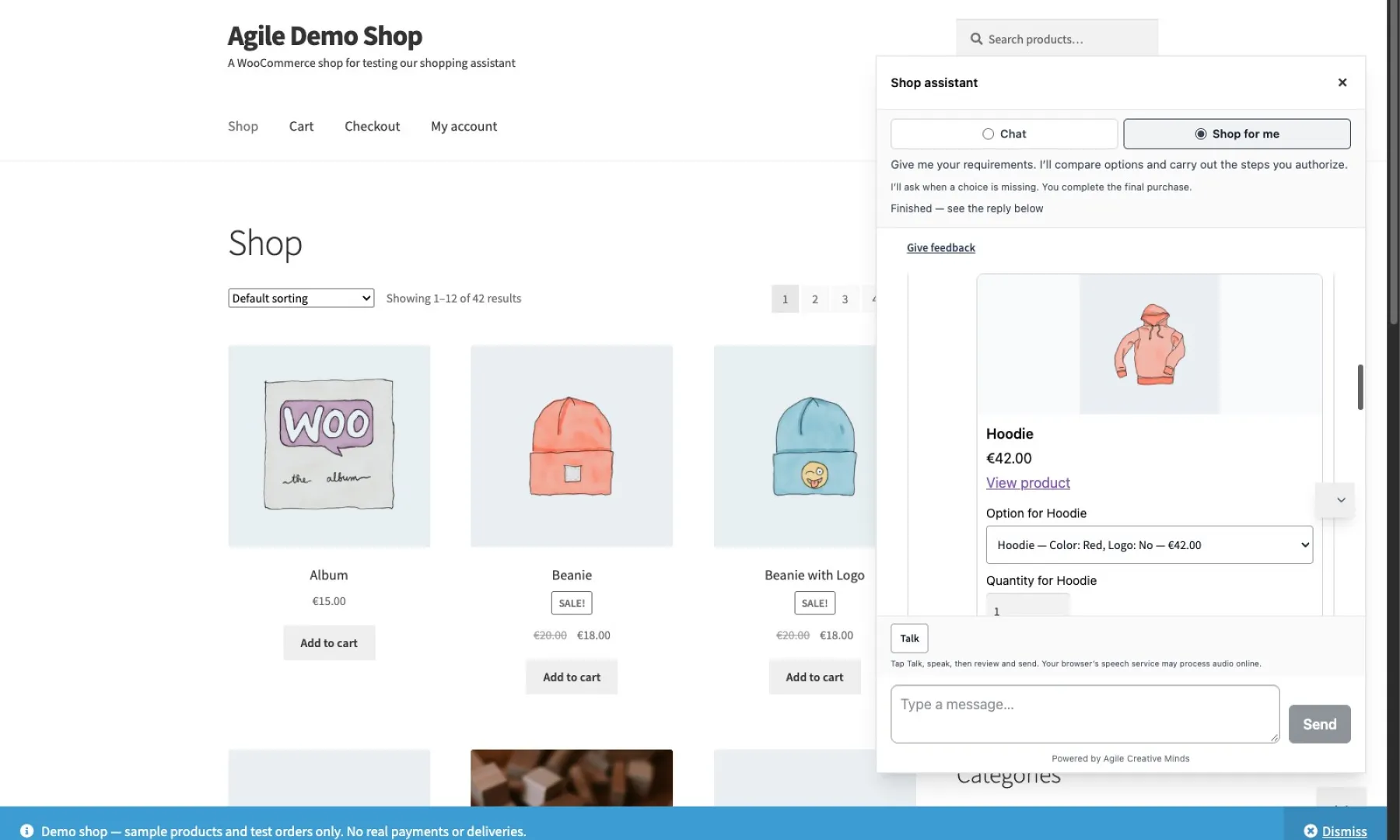
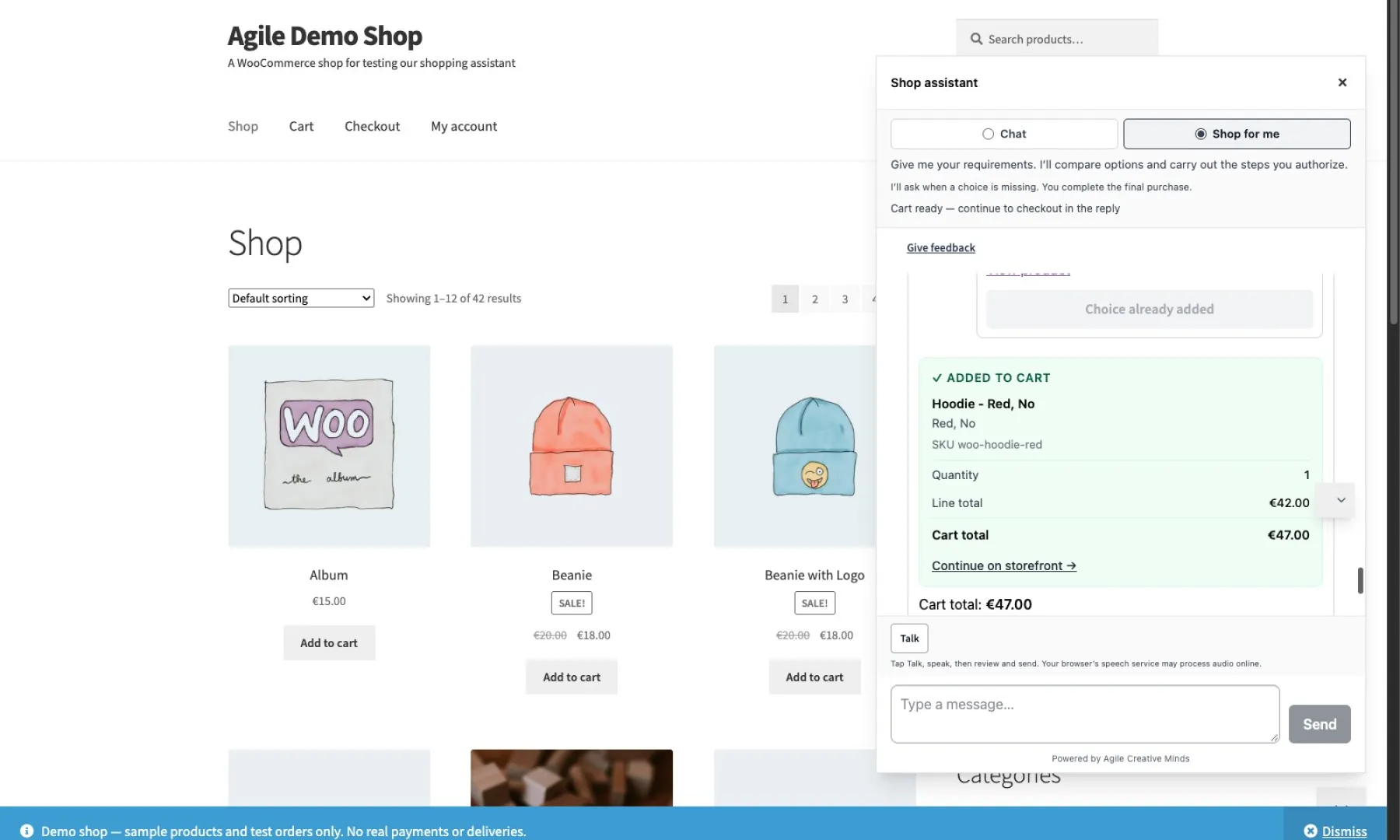
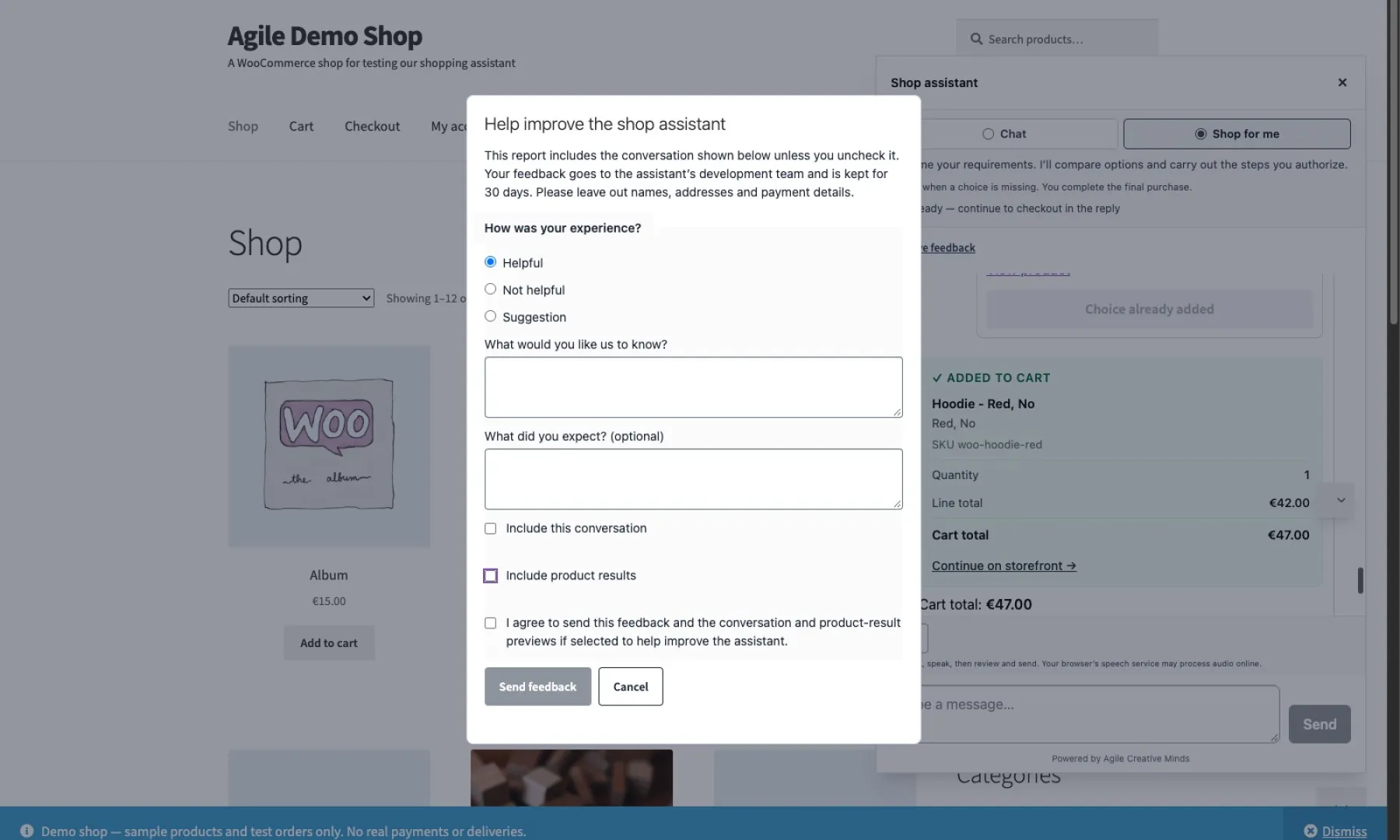
Real screens from the working demo shops: product discovery in Drupal, variation choices in WooCommerce, a confirmed cart action and feedback with explicit consent.
Live Storefronts
Drupal Commerce and WordPress / WooCommerce
Ways to Shop
Ask questions in Chat or delegate steps in Shop for me
Connected Steps
Discover products, choose options, update the cart and share feedback
Shared Experience
Reusable assistant UI and backend contracts across store integrations
From Questions to Cart
An assistant connected to the real storefront, with useful product cards and visible action results. The merchant’s catalog and cart remain the source of truth.
Catalog-backed discovery
Describe what you need instead of guessing search terms. The agent searches store tools and uses product details to explain matches, alternatives and missing information.
Useful choices, visible products
Compare product cards, follow native product links and choose available variations before adding. Prices and options come from the connected store.
Controlled cart actions
Ask the assistant to add, change quantities or remove items. A store-confirmed receipt shows what changed. The shopper retains control of the final checkout and purchase.
Conversation continuity
Keep the shopping conversation as you navigate the store. Store-verified identity and persisted state support continuity across page changes and token refreshes.
A familiar chat experience
Switch between Chat and Shop for me, stop a response, copy an answer or read it aloud. Browser-supported voice input lets shoppers speak, review and send their request.
Feedback with consent
Mark a response helpful, report a problem or suggest an improvement. Review optional conversation and product context, then give explicit consent before submitting feedback.
Built With
The live demos use a Python backend built with the OpenAI Agents SDK and the existing CopilotKit interface. Earlier LangChain and LangGraph development established valuable experience with tools, state and evaluation. Those frameworks belong to the project’s engineering journey; they do not power the current live demo.
How It Connects
A reusable conversation layer connects to platform-specific store tools. The agent gathers product evidence, prepares an answer and performs only the shopping actions the customer authorizes.
Storefront experience
CopilotKit and React provide chat, product cards, choices, cart receipts and the feedback interface.
Python agent
The OpenAI Agents SDK coordinates the conversation and tools; a separate writing step turns gathered evidence into a customer-facing answer.
Native store tools
Authenticated REST integrations read catalog facts and apply cart changes in Drupal Commerce or WooCommerce.
State and action guards
Verified identity, durable conversation state, bounded requests and store validation support controlled actions and recoverable failures.
Evaluation and feedback
LangSmith datasets and traces, deterministic checks and browser journeys reveal issues. Consented user feedback helps guide the next improvements.
What We Learned
The strongest result is more than a framework choice: it is a clearer way to build, compare and improve a useful shopping agent.
LangChain & LangGraph foundations
The earlier implementation explored Python agents, tool orchestration and conversation state. It helped establish the storefront experience and integration contracts reused in the current work.
Evidence before assumptions
LangSmith cases and traces made answer quality inspectable. Browser testing added a different check: whether a shopper can actually search, choose, change a cart and send feedback. Passing software checks is distinct from passing AI evaluations.
Modular integration pays off
Keeping the storefront, store tools and agent implementation behind clear boundaries made backend experiments possible without rebuilding the entire shopping interface. That experience informs our LangGraph, LangChain and SDK integration services.
Adapt It to Your Store
Drupal Commerce and WooCommerce are the working demonstrations. Shopify, Magento and custom commerce systems are opportunities for a dedicated connector—not integrations already included in this demo.
Shopify integration
A proposed connector would map your Shopify catalog, variants and cart workflow into the assistant’s store-tool contracts, subject to the platform’s API and authentication requirements.
Magento / Adobe Commerce
A proposed integration would respect your catalog structure, configurable products, customer context and cart rules, using the platform’s supported APIs.
Headless & custom commerce
For an API-driven store, we can assess the catalog and transaction boundaries, connect the existing frontend and build an evaluation set around your customers’ actual questions.
Try the Live Shops
Browse without signing up. Open the assistant, ask a product question, choose an option and try a cart change. These are demo shops with sample products; use fictional details and stop before placing an order. Live AI usage is limited, and product claims should always be checked against the listing.